
When you need garage door spring repair in Happy Valley, acting fast can mean the difference between a quick fix and a serious breakdown. Springs are the hardest-working component in your garage door system — and when they fail, the entire door can become unsafe to use.
Happy Valley sits in Clackamas County, where wet Pacific Northwest winters and sharp temperature swings put extra stress on metal components. As a result, local homeowners often see spring wear occur sooner than expected. A failed spring doesn’t just leave you stuck in the driveway — it can strain your opener motor, create a safety hazard, and leave your home unsecured.
This guide covers everything you need to know: why springs fail in our local climate, the warning signs you shouldn’t ignore, the differences between torsion and extension systems, and why professional service is always the safer path.
Why Springs Fail in Happy Valley Homes
Understanding why springs break is the first step toward preventing a costly failure. Knowing the cause helps you catch problems early — before a small issue becomes a major one.
Most standard garage door springs are rated for about 10,000 cycles — and one cycle equals one open-and-close. For a typical household using the door four times daily, that’s roughly seven years of use before wear sets in.
Several factors accelerate that wear, especially in Happy Valley:
- Temperature swings — Cold Oregon winters cause metal to contract, adding stress to coils
- Moisture and rust — Pacific Northwest humidity corrodes spring metal over time
- Lack of lubrication — Dry springs wear out significantly faster than properly maintained ones
- Improper spring size — A spring that doesn’t match your door’s weight fails prematurely
Happy Valley sits at a higher elevation than much of the Portland metro area. As a result, it sees sharper temperature drops in winter. For example, a spring already near the end of its cycle life can snap suddenly on a cold morning. In addition, homes near wooded areas face extra moisture exposure — and that moisture speeds up rust, which weakens coil integrity quickly.
Catching wear early saves time and stress. Watch for these early warning signals:
- The door moves unevenly or jerks during operation
- You hear loud banging or popping sounds
- The door feels unusually heavy when lifted manually
- You notice a visible gap in the spring coil
For more on related hardware issues, see our guide on common garage door problems we fix in Portland homes. Regular maintenance also helps extend spring life significantly — learn more at our Portland garage door maintenance services page.
Warning Signs to Watch For
Catching a spring problem early can prevent a much larger repair. Springs operate under extreme tension — a snapped spring can cause injury or trap your car inside. Knowing the warning signs helps you act before a full failure occurs.
The door feels heavy or moves unevenly. A healthy spring system makes your door feel almost weightless. However, when springs weaken, the door becomes hard to lift manually. In fact, a properly balanced door should stay in place when raised halfway — if it drops, your springs are likely failing. Also watch for uneven movement: one side rising faster than the other is a clear red flag.
Sounds that signal trouble. Springs don’t fail silently. Listen for:
- Loud bang — sounds like a gunshot and usually means a spring snapped
- Squeaking or grinding — friction from worn coils rubbing against the shaft
- Popping noises — coils losing tension unevenly as the door moves
For instance, a sudden loud bang from your garage at night is almost always a broken torsion spring. Don’t attempt to operate the door after hearing this sound.
Visible damage to check. Take a close look at your springs every few months. Specifically, look for gaps or separation in the coil, rust or corrosion along the spring body, and stretched or elongated coils that look uneven. According to the U.S. Consumer Product Safety Commission, thousands of garage door-related injuries occur each year — many involving spring failures and amateur repair attempts.
The door reverses or won’t open fully. Similarly, a door that reverses before closing or stops partway up often points to spring tension loss. Your opener’s motor strains to compensate — and that shortens its lifespan considerably. Check out our guide on top garage door repair services in Happy Valley for local support options.
Torsion vs Extension Springs: What Homeowners Need to Know
One of the first things a technician confirms during a service call is which spring system your door uses. However, many homeowners don’t know the difference — and that gap in knowledge can lead to the wrong repair approach.
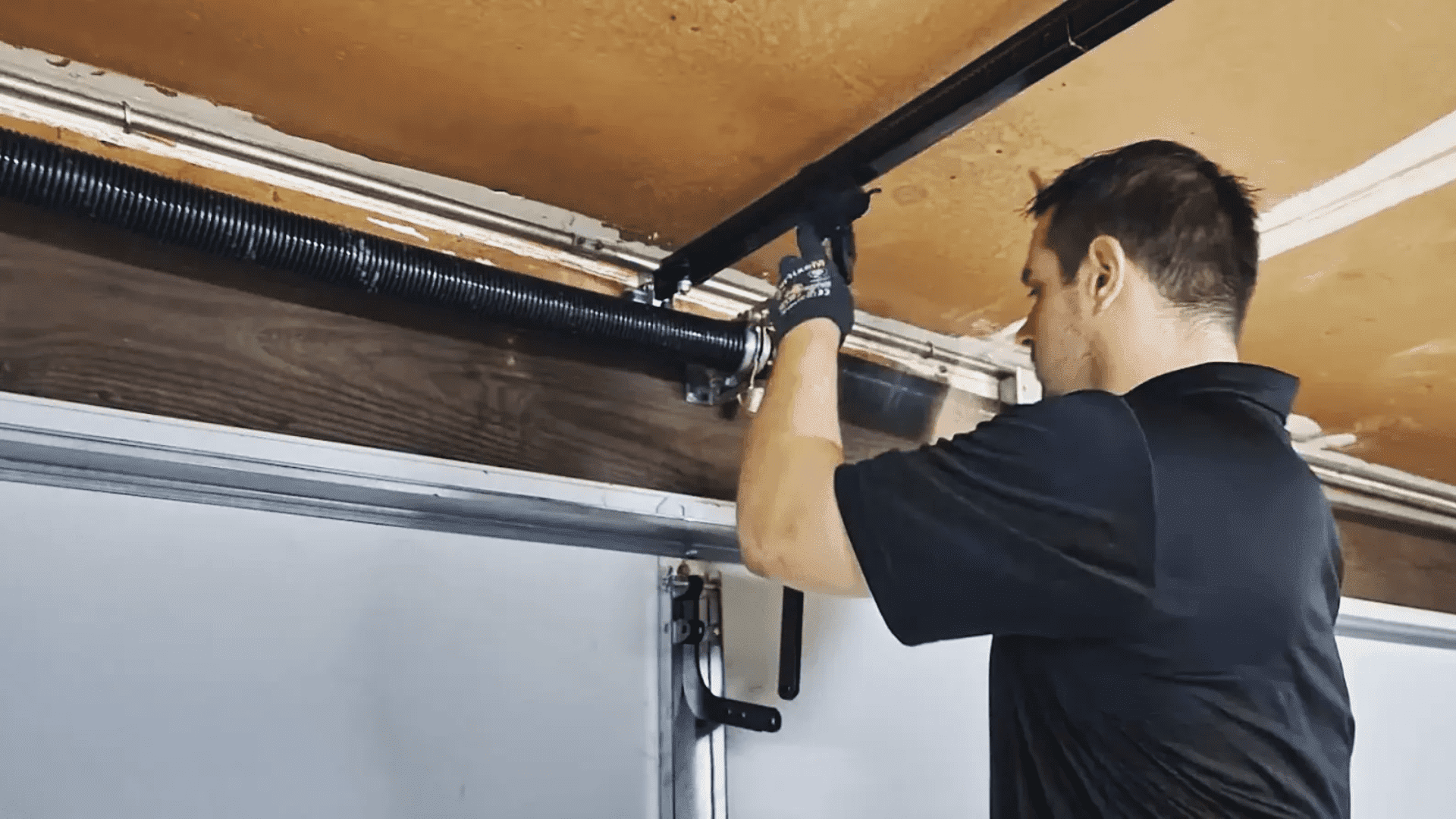
Torsion springs mount horizontally above the garage door opening. They work by winding and unwinding to lift and lower the door smoothly.
- Lifespan: Typically rated for 10,000–20,000 cycles
- Best for: Heavier, wider doors common in newer Happy Valley homes
- Key benefit: More controlled, balanced lifting motion with less wear on the opener
Because torsion springs store a large amount of tension, they require professional handling — no exceptions.
Extension springs run along the horizontal tracks on each side of the door. They stretch and contract as the door moves up and down.
- Lifespan: Usually rated for 7,000–10,000 cycles
- Best for: Lighter, single-car doors in older homes
- Key benefit: More common in homes built before the 2000s
However, extension springs can snap and fly loose when they break. A safety cable threaded through each spring helps contain this risk — but only if properly installed and maintained.
Spring Type Comparison
Professional Spring Repair vs DIY: The Safe Choice for Happy Valley Residents
When weighing your options, Happy Valley homeowners face a critical question: tackle it yourself or call a pro? The answer is almost always clear — leave spring work to trained technicians.
Why DIY Spring Repair Is Dangerous
Garage door springs store enormous mechanical energy. A torsion spring on a standard two-car door holds a significant amount of stored torque. If it releases suddenly, it can cause serious injury or property damage in an instant.
Consider what DIY attempts risk:
- Sudden spring snap — causing lacerations or broken bones
- Cable whiplash — snapping cables can strike with extreme force
- Door collapse — improper reassembly leads to a falling door
- Voided warranties — most manufacturers require professional installation
In fact, the U.S. Consumer Product Safety Commission reports thousands of garage door-related injuries annually, with spring failures among the leading causes.
What Professionals Bring to the Job
A certified technician arrives with the right tools, replacement parts, and safety training. However, it goes beyond just having the right wrench. Professionals provide:
- Accurate spring sizing — wrong spring weight causes premature failure
- Balanced tension adjustment — ensures smooth, even door movement
- Full safety inspection — cables, drums, and hardware get checked too
- Warranty-backed work — protects your investment long-term
For example, a technician can spot worn cables or a bent track before they become bigger problems. On the other hand, a failed DIY repair often costs more in the end — you may damage the door panel, bend the track, or injure yourself, all adding up fast.
| Approach | DIY | Professional Service |
|---|---|---|
| Safety Risk | Very High | Managed — trained technician |
| Tools Needed | Specialized winding bars, cones | Technician-supplied |
| Time Required | Several hours (if successful) | Typically under 2 hours |
| Result Quality | Variable — high error risk | Consistent, warrantied |
| Recommended? | No | Yes |
Why Happy Valley Homeowners Trust PDX Garage Door for Spring Repair
Happy Valley’s climate puts real stress on garage door hardware. However, our technicians know exactly how seasonal temperature swings affect spring tension and metal fatigue. PDX Garage Door serves the greater Portland metro area with fast response times, honest assessments, and quality parts built to last.
We bring:
- Same-day service for most spring failures
- Fully stocked trucks — no waiting on parts
- Experienced technicians with hands-on knowledge of local conditions
- Transparent, upfront process before any work begins
In our experience, the most common mistake homeowners make is waiting too long after noticing a warning sign. Furthermore, delaying a spring repair often leads to opener motor damage — turning a single repair into two. As a result, we always recommend calling at the first sign of trouble rather than waiting for a full failure.
Finally, spring failures rarely happen at a convenient time. Therefore, we offer flexible scheduling, including emergency calls. Learn more about our full range of local Happy Valley garage door services and see why neighbors keep calling us back.
FAQ
About This Guide
This guide was researched and drafted with AI assistance, then reviewed for accuracy by the PDX Garage Door team. Information reflects local conditions in Portland. Last updated July 2026. For questions specific to your situation, contact us directly.
Conclusion & Contact
Happy Valley homeowners deal with unique wear conditions — cold winters, damp springs, and elevated terrain all accelerate spring fatigue. Recognizing the warning signs early saves time, stress, and avoids more extensive repairs down the road.
Here’s a quick recap of what to remember:
- Unusual noises or slow door movement signal early spring wear
- Torsion springs last longer and perform better for most modern homes
- DIY spring repair carries serious injury risk — always call a professional
- Replacing both springs at once prevents a second service call within weeks
When you need reliable spring repair, our local team at PDX Garage Door is ready to help. We serve Happy Valley and the greater Portland metro area with fast response times, honest assessments, and quality parts built to last.
For related services, explore our garage door spring repair in Portland page or learn about what to expect from garage door services in Happy Valley.
Contact PDX Garage Door: 📞 (503) 936-9728 📍 6515 SE Sherrett St, Portland, OR 97206
Call us today or request a service visit online — we’re proud to be your trusted local garage door experts.
