When you need garage door off track repair Lake Oswego, acting fast matters. A derailed door doesn’t just trap your car — it creates a real safety hazard for your family. The good news? Not every off-track situation requires a full overhaul — many issues can be resolved quickly with the right approach.
Here’s a quick overview of the five fast fixes covered in this guide:
- Stop using the door immediately — prevent further damage the moment you notice a problem
- Visually inspect the tracks — look for bends, gaps, or debris blocking the rollers
- Check and tighten loose hardware — bolts and brackets loosen with daily vibration
- Clear obstructions from the track — even small debris can knock a roller off course
- Call a licensed technician — for bent tracks, broken cables, or spring issues, professional help is the safest path
Some fixes are genuinely simple. However, others — like a snapped cable or a badly bent track — are upper-tier repairs that need trained hands. For a deeper look at common derailment causes, check out our guide on garage door off track repair in Portland. Also, if your door has broader mechanical issues, our most common garage door problems guide is a helpful next step.
Why Off-Track Garage Doors Happen in Lake Oswego
In our experience, when a garage door derails, the first step is understanding what caused the problem. Knowing the root cause helps you prevent it from happening again — and helps your technician diagnose the fix faster.
Lake Oswego’s wet winters and temperature swings put real stress on garage door hardware. However, most off-track problems come down to a handful of repeatable causes:
- Worn or broken rollers — Rollers degrade over time, especially in damp conditions. Once they crack or flatten, they slip out of the track easily.
- Bent or damaged tracks — A bump from a car, a falling object, or simple corrosion can warp the metal rail just enough to derail the door.
- Broken springs — A snapped torsion or extension spring forces uneven weight distribution, pulling one side off the track.
- Loose track hardware — Bolts and brackets loosen over years of vibration. Even a small gap between the track and wall can cause misalignment.
- Cable failure — Frayed or snapped lift cables throw the door off balance instantly.
Lake Oswego sits in the Tualatin Valley foothills, where moisture levels stay high for months at a time. As a result, metal components rust faster than in drier climates — roller bearings and track joints are the first parts to corrode. In addition, temperature shifts between cold, wet winters and warm summers cause metal tracks to expand and contract, loosening fasteners and widening gaps over time.
A door that jumps the track even slightly will keep getting worse with every cycle. For example, a small bend in the track becomes a larger one after repeated open-and-close cycles. Also, a misaligned door strains the opener motor, shortening its lifespan. According to the International Door Association, garage doors cycle more than 1,500 times per year in the average home — making even minor misalignments a compounding problem.
Learn more about the most common garage door problems we fix in Portland homes to spot early warning signs before a minor issue becomes a costly repair.
The Professional Repair Process: Step by Step
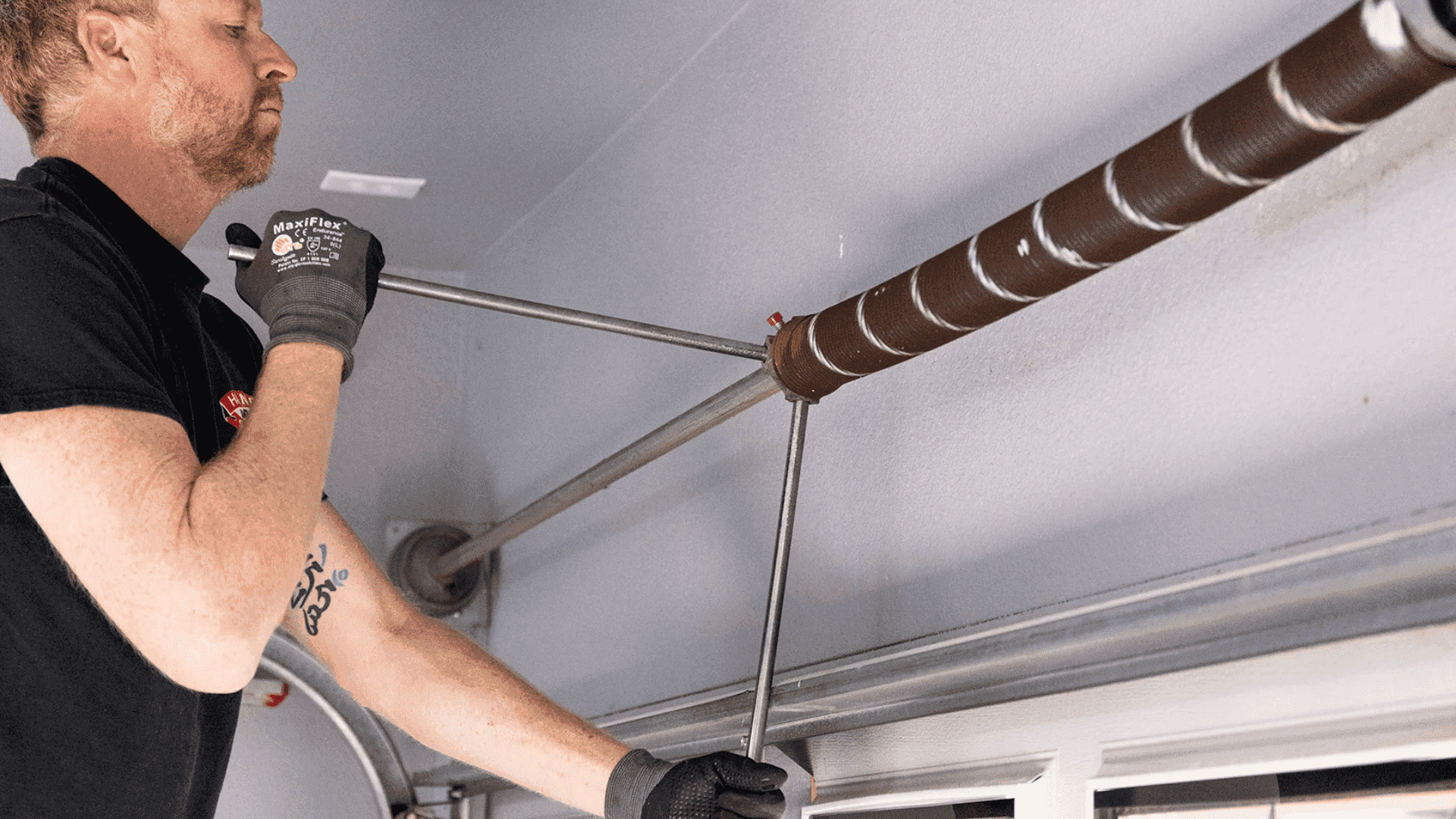
When a technician arrives for a service call, homeowners can expect a clear, structured process. First, the pro secures the door in place to prevent further movement or injury. Because garage door springs hold significant tension — often hundreds of pounds of force — only trained technicians should handle the tension-release step safely.
The Consumer Product Safety Commission reports that garage door injuries send thousands of Americans to emergency rooms each year. That’s why every step in the professional process is designed to protect both the technician and the homeowner.
Here is what a professional repair visit looks like from start to finish:
- Safety inspection — The technician checks for bent track sections, broken rollers, loose hardware, and spring tension issues. This typically takes 10–15 minutes but shapes every decision that follows.
- Opener disconnect — The automatic opener is disconnected before any hands-on work begins, eliminating the risk of accidental activation.
- Track and roller realignment — The technician guides each roller back into the track channel, then checks alignment with a level. Vertical and horizontal sections should meet at the correct angle — usually between 90° and 95°.
- Hardware tightening and lubrication — All bolts, brackets, and hinges get tightened. The technician then lubricates rollers and tracks to reduce friction and prevent future derailments.
- Test cycles — The door runs through several open-and-close cycles. The technician confirms smooth, balanced movement before the job is complete.
If the track is bent, specialized tools may be used to reshape it. In some cases, full track replacement is the right call. You can learn more about what a typical service visit involves at Portland Garage Door Repairs — What to Expect. See related tips at How to Fix a Garage Door.
Garage Door Off Track Repair Lake Oswego: DIY vs. Professional
Many homeowners wonder if they can skip the service call and fix a derailed door themselves. However, before grabbing your tools, it’s worth understanding what’s actually at stake.
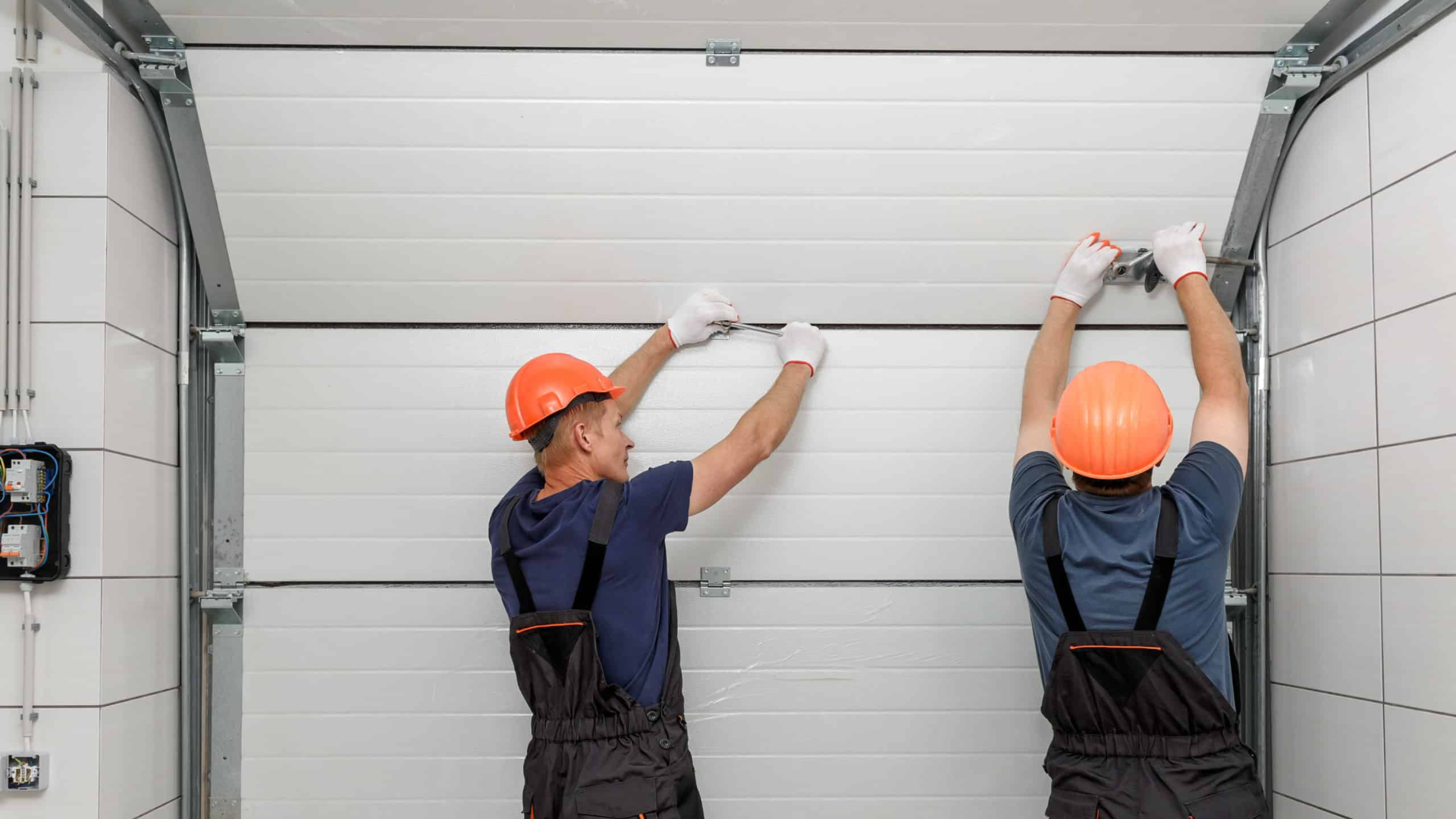
Garage doors weigh between 150 and 400 pounds. Because of this, a door that slips during a DIY attempt can cause serious injury. In fact, the CPSC reports thousands of garage door injuries each year — many tied to spring and track work. DIY track repair also risks worsening the bend in an already damaged track, snapping a torsion spring under tension, misaligning rollers and causing faster wear, or voiding your door’s warranty.
Some minor tasks are safe for homeowners. For example, tightening loose bolts or wiping down tracks with a clean cloth is low-risk.
Service Tiers for Off-Track Repair
Not every derailed door needs the same fix. However, the scope of damage determines which service tier fits your situation. Understanding these tiers helps you have a more informed conversation with your technician.
| Tier | Scope of Work | Best For |
|---|---|---|
| Entry-Tier | Minor track misalignment, loose hardware tightening, small dent reshaping | Single bracket issue, minor roller slippage |
| Standard-Tier | Roller replacement, single track section realignment, cable tension adjustment | Moderate wear, one-side derailment |
| Mid-Tier | Multiple roller swap-out, dual-track realignment, cable and drum work | Both tracks affected, recurring derailments |
| Upper-Tier | Bent track section replacement, panel correction, spring system inspection | Structural track damage, impact-related derailment |
| Premium-Tier | Full track replacement, spring overhaul, opener recalibration | Severe damage, older door systems needing full restoration |
For related spring issues that often accompany upper-tier repairs, see our guide on garage door spring repair in Portland. Also, learn more about common garage door problems we fix to understand the full repair picture.
Preventive Maintenance to Stay Off-Track-Free
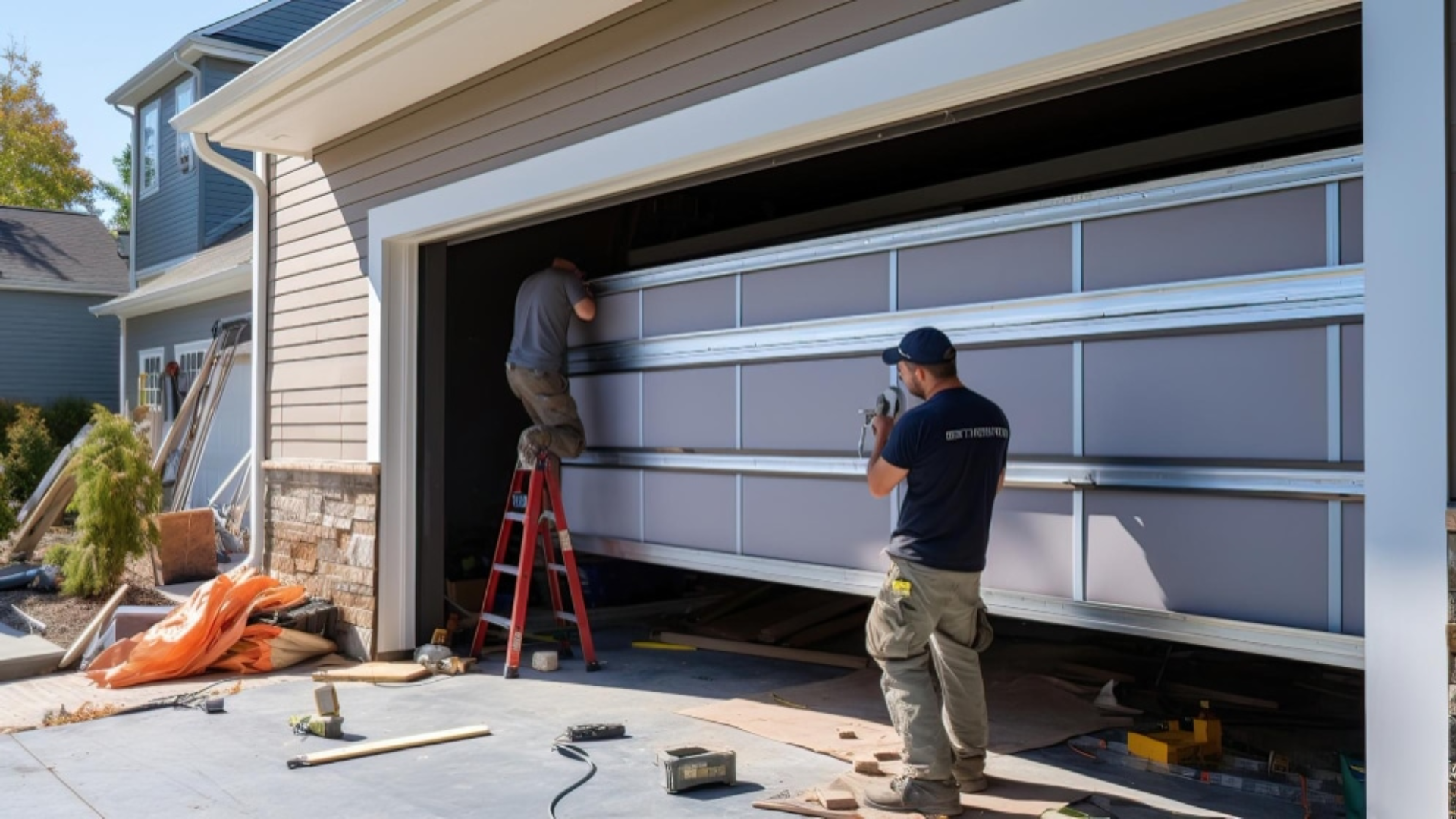
Simple habits go a long way toward avoiding emergency repairs. In fact, most derailments are preventable with routine care. Spending 30 minutes every few months can save you significant time and inconvenience down the road.
Use a silicone-based or lithium spray lubricant every 3–6 months on rollers (especially the stems and bearings), hinges at all pivot points, tracks (a light wipe, not a heavy coat), and springs to reduce stress and noise. Avoid WD-40 on these parts — it strips existing lubrication instead of adding it. For a full walkthrough, see our guide on how to grease your garage door.
Also, check these items monthly to stay ahead of problems:
- Track alignment — both sides should be plumb and parallel
- Mounting bolts — tighten any that feel loose
- Roller condition — look for cracks, chips, or flat spots
- Cable tension — cables should look even on both sides
Maintenance Schedule at a Glance
| Task | Frequency | DIY or Pro? |
|---|---|---|
| Lubricate rollers, hinges, springs | Every 3–6 months | DIY |
| Wipe tracks clean of debris | Monthly | DIY |
| Inspect track alignment | Monthly | DIY |
| Tighten mounting hardware | Every 6 months | DIY |
| Balance test (manual lift check) | Twice a year | DIY |
| Full professional tune-up | Annually | Pro |
| Weather seal inspection | Each fall | DIY or Pro |
To test door balance, disconnect the opener and lift the door manually to waist height. Release it — a balanced door stays put. For instance, if it falls or shoots up, the springs need adjustment — a job for a licensed technician. Also, keep the area around your tracks clear of debris, especially during Oregon’s rainy season when leaves and grit build up fast. Pair these habits with a professional residential tune-up once a year for best results.
FAQ
Conclusion
An off-track garage door is more than an inconvenience — it’s a safety risk. Because Lake Oswego homes face real seasonal stress from rain, temperature swings, and daily use, staying proactive matters. For more detail on related issues, see our guide on what to do when things go sideways or explore real repair cost breakdowns for the Portland area.
Ready to Get Your Door Back on Track?
Don’t wait for a small misalignment to become a full breakdown. Getting help is simple:
- Call us — describe what you’re seeing and we’ll help you assess the urgency
- Schedule your service — we’ll confirm a time that works for your day
- We fix it right — your door runs through full test cycles before we leave
Our team is ready to help. Call us at (503) 936-9728 or visit us at 6515 SE Sherrett St, Portland, OR 97206 for fast, reliable service throughout the Portland area.
About This Guide
This guide was researched and drafted with AI assistance, then reviewed for accuracy by the Business in your area team. Information reflects local conditions in Portland. Last updated July 2026. For questions specific to your situation, contact us directly.