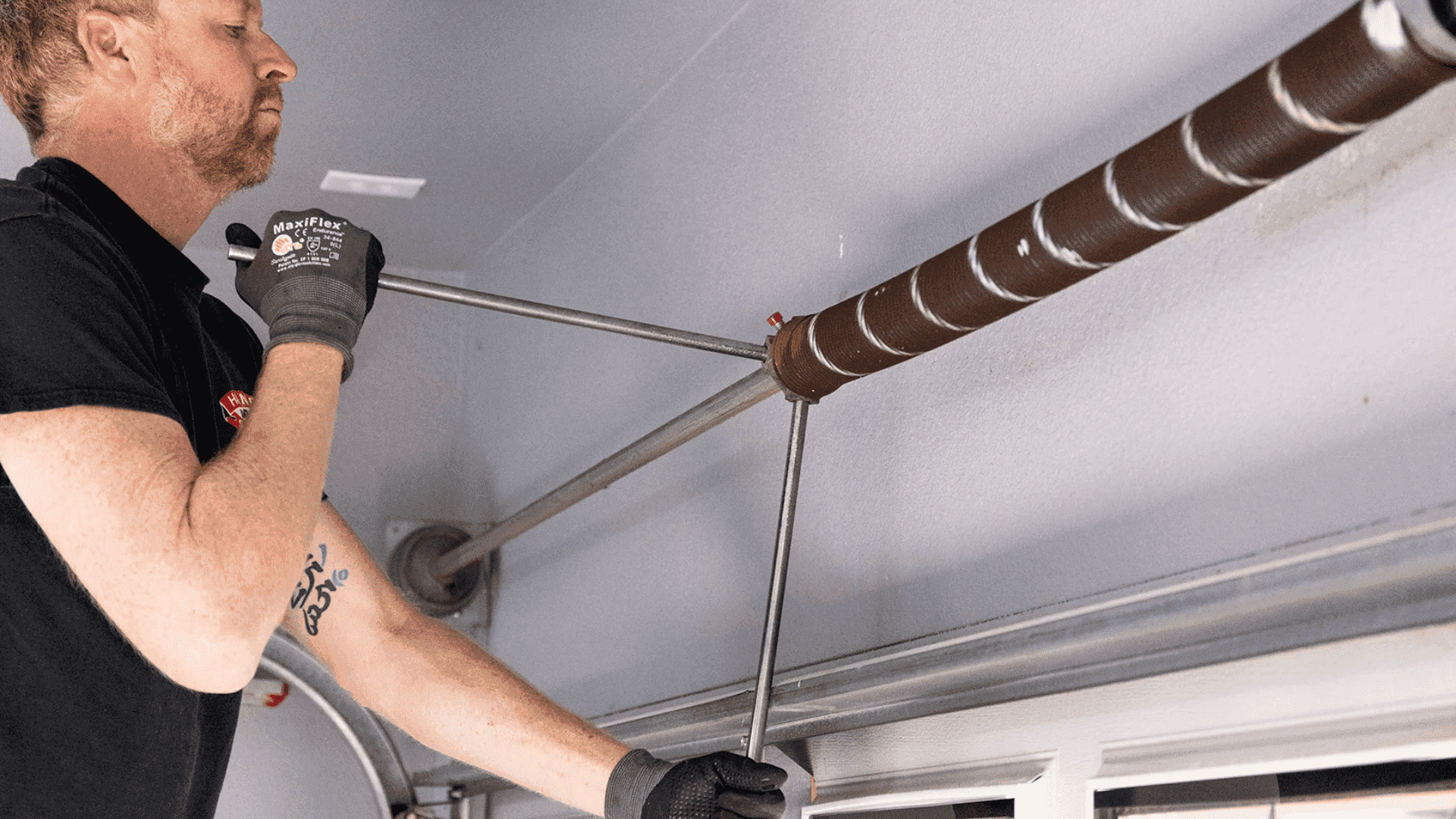
When you need garage door spring repair Gresham homeowners can count on, acting fast matters. A broken spring can stop your door cold — and create a serious safety hazard for your family.
Springs do most of the heavy lifting every time your door moves. However, they wear down over time and can fail without much warning. Knowing the signs early can save you time, stress, and a more costly repair down the road.
5 Warning Signs Your Springs Need Attention
Don’t ignore these common red flags. For example, a door that suddenly feels heavy or unresponsive is often the first clue that a spring is failing.
Watch for these warning signs:
- Loud bang from the garage — a snapped spring sounds like a gunshot
- Door won’t open or opens only a few inches
- Visible gap or break in the spring coil
- Door moves unevenly or one side sags lower than the other
- Cables hanging loose on either side of the door
Also, check your door’s balance regularly. A well-balanced door should stay put when you lift it halfway by hand. In contrast, a door that drops or shoots up likely has a spring problem.
Because springs are under extreme tension, this is not a DIY fix. Professional service is strongly recommended — see OSHA’s guidance on mechanical hazards for more context. You can also explore our related guide on garage door spring repair in Portland for a broader look at spring issues across the region.
How Garage Door Springs Work in Gresham Homes
Springs do the heavy lifting — literally — every time your door moves. Without them, your opener motor would burn out quickly trying to lift the door’s full weight alone.
The Physics Behind Every Lift
Springs work by storing mechanical energy. When you close the door, the spring winds up tight and stores tension. When you open it, that stored energy releases and lifts the door smoothly.
Here’s how the cycle breaks down:
- Closing the door → spring winds and stores energy
- Opening the door → spring unwinds and transfers energy to the door
- Motor’s role → guides movement, not the main lifting force
- Spring cycle life → most standard springs are rated for 10,000–20,000 cycles
For context, one cycle equals one open-and-close. A busy household may use four to six cycles daily, meaning springs can wear out in five to ten years.
Why Gresham’s Climate Adds Stress
Gresham sits in the Columbia River Gorge corridor, where temperatures swing between cold, wet winters and warm, dry summers. These shifts cause metal to expand and contract repeatedly, accelerating wear.
Also, moisture from rain and morning fog speeds up rust on spring coils. Rust weakens metal faster than normal wear alone. The International Door Association notes that environmental exposure is one of the top factors shortening spring lifespan.
For a deeper look at how springs connect to overall door health, see our guide on garage door spring replacement in Portland.
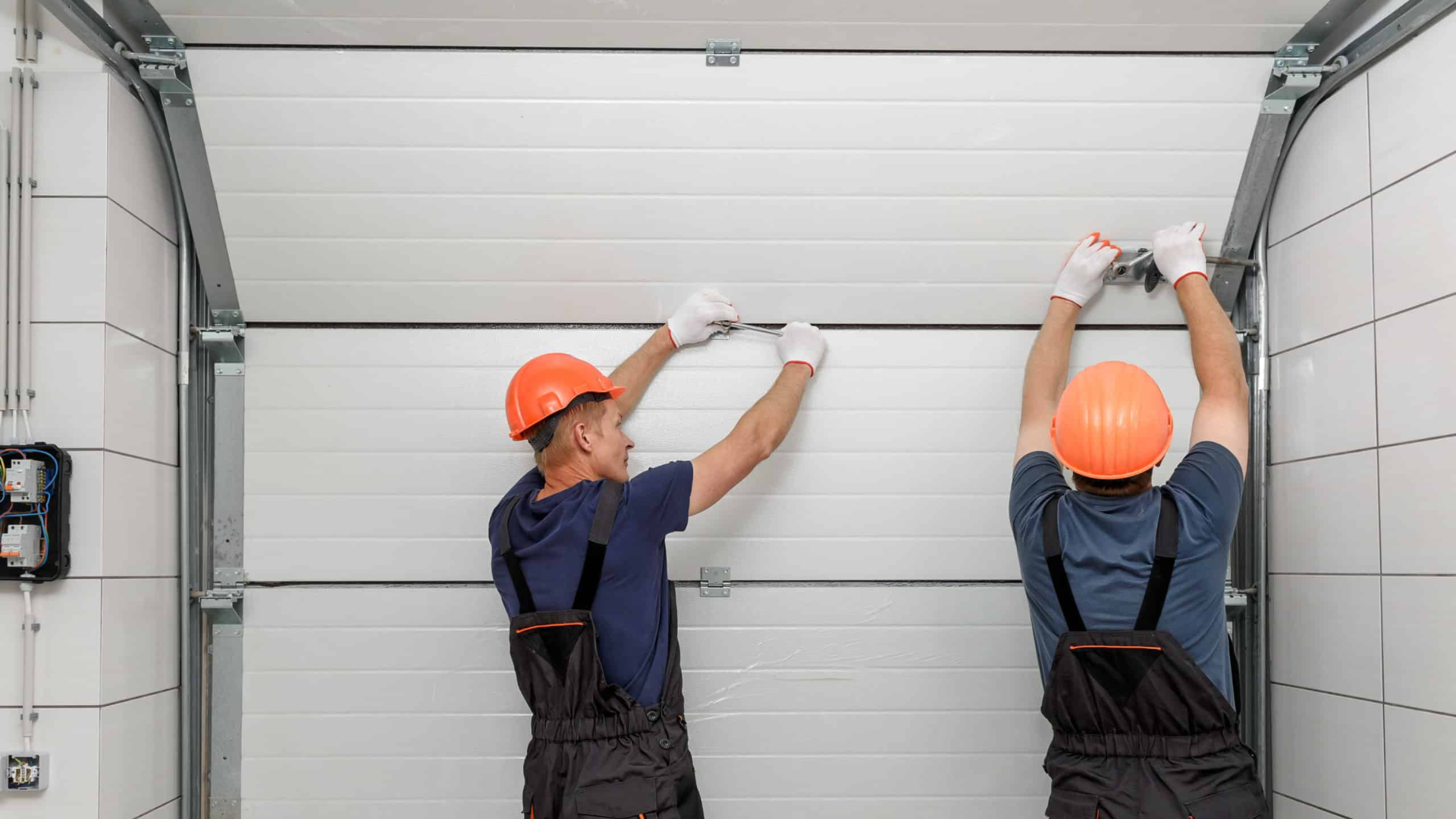
Torsion vs Extension Springs: Which Does Your Door Use?
Most residential doors use one of two spring systems: torsion springs or extension springs. Each works differently and requires a different repair approach. Knowing which type you have helps you understand what’s involved in the fix.
Torsion Springs: The Modern Standard
Torsion springs mount horizontally above the door opening. They work by winding and unwinding to lift and lower the door. Because the tension stays centered, these springs offer smoother, more balanced operation.
Key facts about torsion springs:
- Lifespan: Typically rated for 10,000–20,000 cycles
- Location: Mounted on a metal shaft above the door
- Common in: Heavier doors and newer Gresham homes built after 2000
- Failure sign: A loud bang, followed by a door that won’t lift
Extension Springs: The Older Design
Extension springs run along the horizontal tracks on each side of the door. They stretch and contract as the door moves. However, they wear out faster and can snap with more force if a safety cable isn’t installed.
Extension spring facts:
- Lifespan: Usually 7,000–10,000 cycles
- Location: Along the upper side tracks
- Common in: Older homes and lighter single-car doors
- Risk factor: Broken springs can become dangerous projectiles without safety cables
| Feature | Torsion Springs | Extension Springs |
|---|---|---|
| Mounting location | Above door opening | Along side tracks |
| Typical cycle rating | 10,000–20,000 | 7,000–10,000 |
| Balance & smoothness | Superior | Adequate |
| Common in Gresham | Newer homes (post-2000) | Older homes |
| Safety risk if broken | Moderate | Higher (without safety cables) |
In fact, most homes built after 2000 use torsion springs. A quick look above your door will tell you which type you have. For related spring repair resources, visit our spring repair category.
Bottom line: Both systems require professional hands. Never attempt spring repairs yourself — the stored energy can cause serious injury.
The Professional Repair Process Step by Step
Knowing what to expect helps you feel confident and prepared when a technician arrives. A trained pro follows a clear, proven process — from the first inspection to the final safety check.
Step 1: Safety Assessment First
First, the technician inspects the full door system. They check the spring type, cable condition, and hardware wear. Because springs store extreme tension, this step protects both the technician and your home.
- Inspect torsion bar or extension spring setup
- Check cables, drums, and pulleys for wear
- Test door balance manually
Step 2: Releasing Stored Tension
Next, the pro carefully releases all tension from the broken spring. This is the most dangerous part of any spring repair job. OSHA guidelines confirm that stored mechanical energy must be fully controlled before repair work begins.
Step 3: Removing and Replacing the Spring
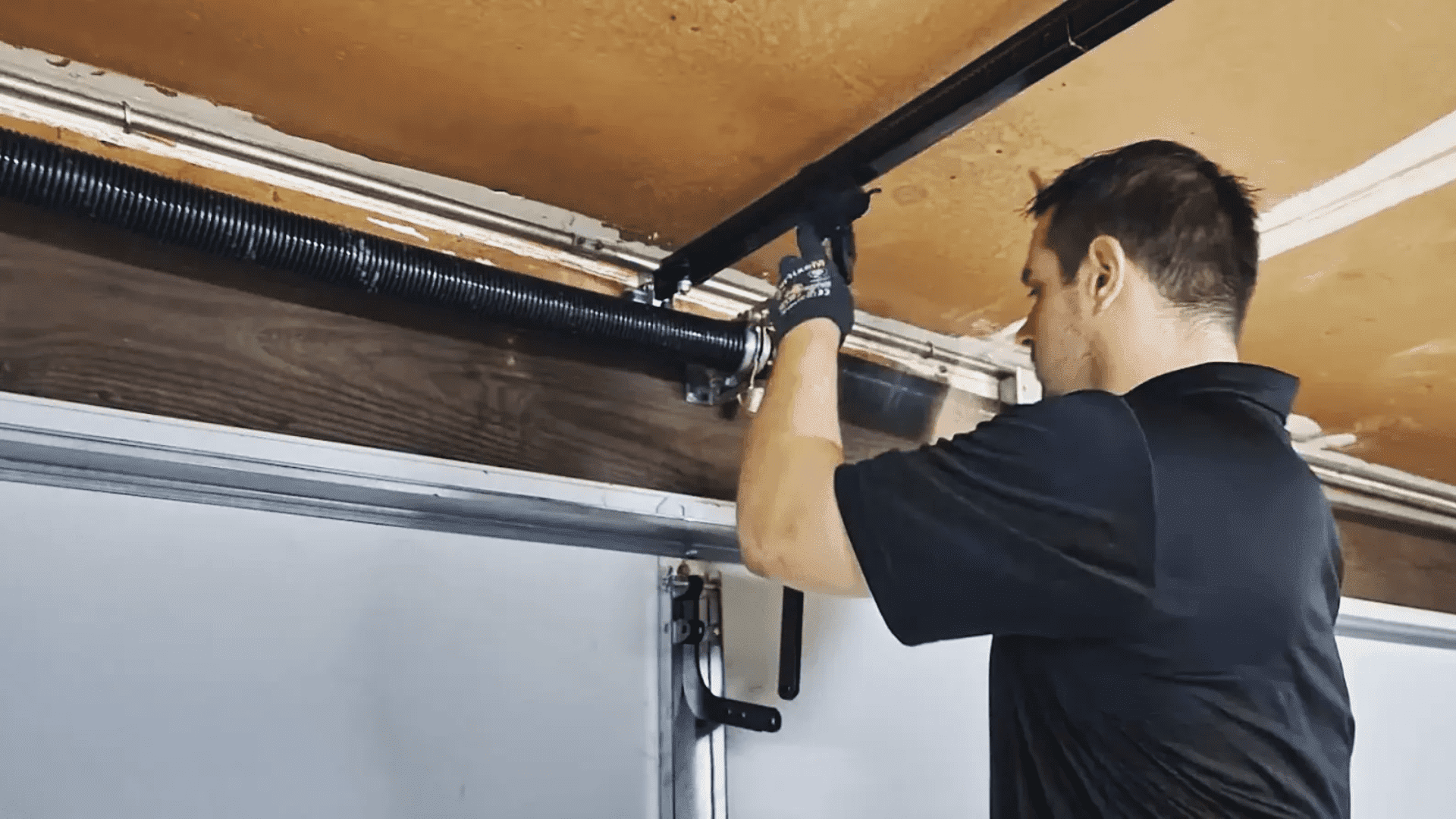
The technician removes the damaged spring and installs a new one matched to your door’s exact weight and size. Proper spring sizing is critical — an undersized spring will fail prematurely, while an oversized one can damage the door hardware.
Step 4: Tension Adjustment and Calibration
After installation, the tech winds the new spring to the correct tension using specialized tools. Also, improper winding is a leading cause of premature spring failure and uneven door movement.
Step 5: Full System Test
Finally, the technician runs a complete door cycle test. They verify:
- Smooth, balanced movement up and down
- Auto-reverse safety feature works correctly
- No unusual noise or vibration during operation
A professional repair typically wraps up in under two hours. However, skipping any step — especially tension calibration — can shorten spring life significantly.
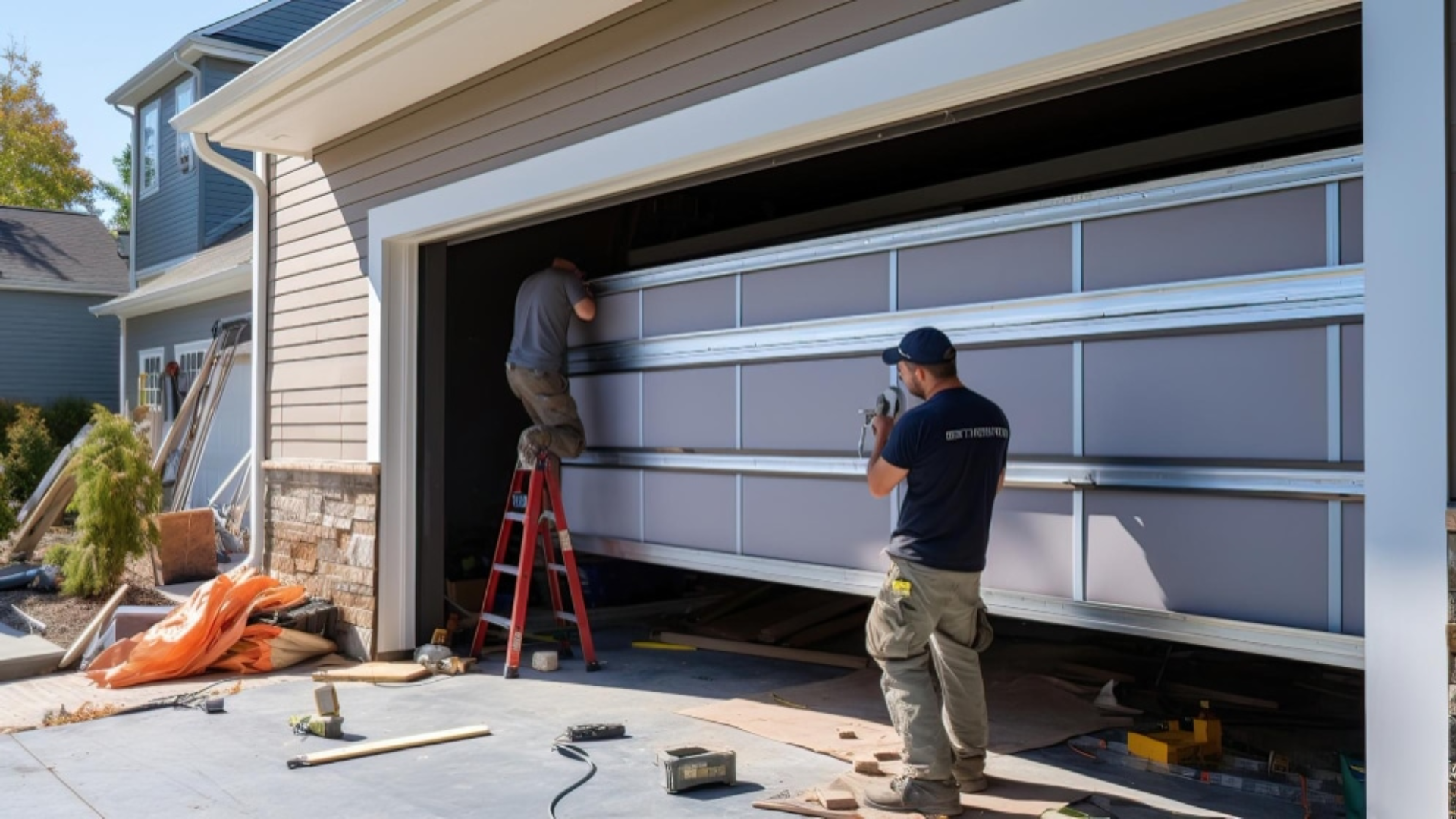
Spring Repair vs Full Replacement
When facing a broken spring, homeowners often ask: fix the spring or replace the whole door? The right answer depends on a few clear factors. Knowing them helps you make a smart, cost-effective decision.
When Repair Is the Right Call
In most cases, a broken spring does not mean you need a new door. Spring repair makes sense when:
- The door panels are in good shape with no major dents or cracks
- The opener and tracks work correctly
- The door is less than 15 years old
- Only one spring has failed (though replacing both at once is strongly recommended)
The Door & Access Systems Manufacturers Association (DASMA) provides technical standards for spring cycle ratings that can help you assess your door’s remaining useful life.
When Full Replacement Makes More Sense
On the other hand, some situations call for a full door replacement. Consider upgrading if:
- The door is warped, heavily damaged, or rusting through
- You’ve had multiple spring failures within a short period
- The door lacks modern safety features like auto-reverse sensors
- Energy efficiency is a concern due to poor insulation
A new insulated door can produce meaningful annual savings on heating and cooling costs — particularly in Gresham’s variable climate. Learn more about the benefits of installing a new garage door for your home.
Cost Comparison at a Glance
| Scenario | Investment Tier | Best For |
|---|---|---|
| Single spring repair | Entry-tier | Door in good overall condition |
| Full spring system replacement | Standard-tier to mid-tier | Aging springs, both sides worn |
| Complete door replacement | Upper-tier to premium-tier | Damaged panels, outdated system |
Why Choose Our Gresham Spring Repair Service
When your spring fails, you need a team that responds quickly and fixes it right the first time. We serve homeowners across the Portland metro area and Gresham with professional spring repair using quality parts built for the Pacific Northwest climate.
Local Expertise You Can Count On
In our experience, Gresham’s damp winters and temperature swings accelerate spring wear more than homeowners expect. Our technicians understand these local conditions and recommend spring grades designed to handle them.
Here’s what sets our service apart:
- Same-day availability for most spring repairs
- Technicians trained on both torsion and extension systems
- High-cycle springs for lasting performance in the Pacific Northwest
- Full safety inspection included with every repair visit
Transparent Process, No Surprises
First, we assess your door’s full system — not just the broken spring. Because small issues often hide behind a snapped spring, we check cables, drums, and hardware too.
Also, we carry parts on every truck. As a result, most repairs finish in a single visit. For more details on what a complete spring service involves, visit our garage door repair service page.
Notably, the Consumer Product Safety Commission identifies garage doors as one of the leading sources of home mechanical injuries. We take that seriously — every job follows strict safety protocols.
FAQ
Conclusion
A broken spring is one of the most common — and most disruptive — garage door problems Gresham homeowners face. Fortunately, a professional repair is fast, reliable, and restores your door to safe, smooth operation. Moreover, catching spring trouble early prevents more costly repairs down the road.
Our team serves the Portland metro area and surrounding communities, including Gresham. We provide prompt, professional spring repair using quality parts built to handle the Pacific Northwest climate. For urgent situations, explore our emergency garage door repair options or browse our full garage door repair service page.
Contact us today to schedule your spring repair:
📞 (503) 936-9728 📍 6515 SE Sherrett St, Portland, OR 97206
About This Guide
This guide was researched and drafted with AI assistance, then reviewed for accuracy by the Business in your area team. Information reflects local conditions in Portland. Last updated July 2026. For questions specific to your situation, contact us directly.